THE PLACE
The people behind the salt.
A summer that became a family business
Salmarim traces its beginning to 2007, when Sandra Madeira and Jorge Raiado spent the summer at her father’s salt pans in Castro Marim. Their interest in food became a new direction for an existing family salt business. The company describes a move away from the declining market linked to fish canning and toward flor de sal for cooks and chefs.
Its timeline records the brand’s registration and first five flavoured flor de sal products in 2008–09. Chef Henrique Mouro contributed the flavours, designer Miguel Vaz created the cardboard packaging, and poet José Carlos Barros supplied the words. From the beginning, salt, food and creative work belonged together.
Jorge’s attention to the harvest
In a Projecto Matéria interview, Jorge describes working with the University of Algarve to better understand production and selecting the crystals he wants to pack. The interview places sun, wind and tides at the centre of the work. It presents a producer concerned with the particular harvest and its texture, rather than treating every batch as interchangeable.
Salmarim explains that flor de sal forms as fragile crystals at the surface of evaporating brine. Collecting that thin layer calls for a different approach from gathering the salt that settles below. Its suggested place in the kitchen is at the end of cooking or at the table.
A place for artists as well as saltmakers
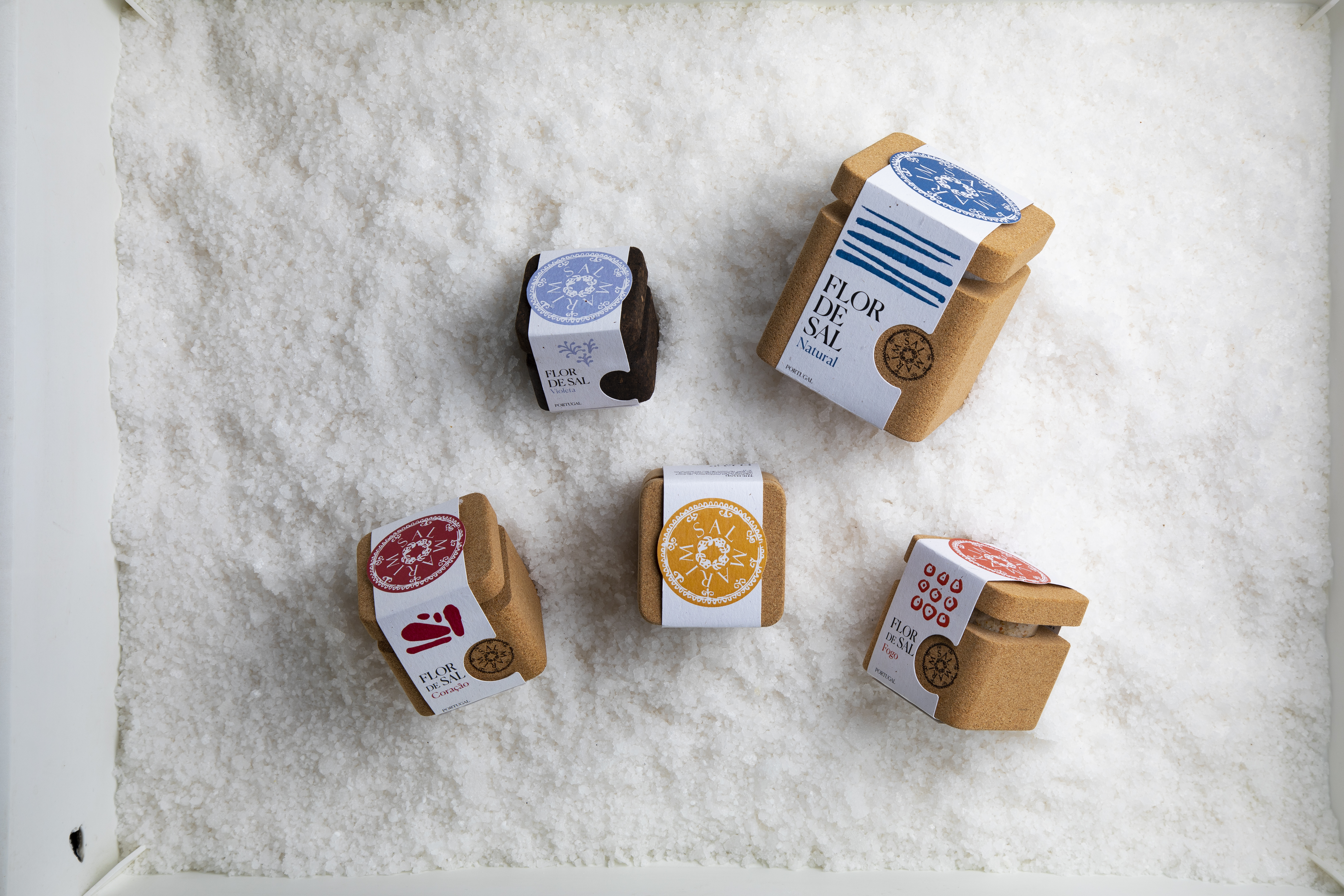
The company dates the launch of its cork salt container to 2012, at A Vida Portuguesa in Lisbon. A portable collection followed in 2014, and later collaborations brought illustrators, writers and ceramic artist Fernanda Rios into the range.
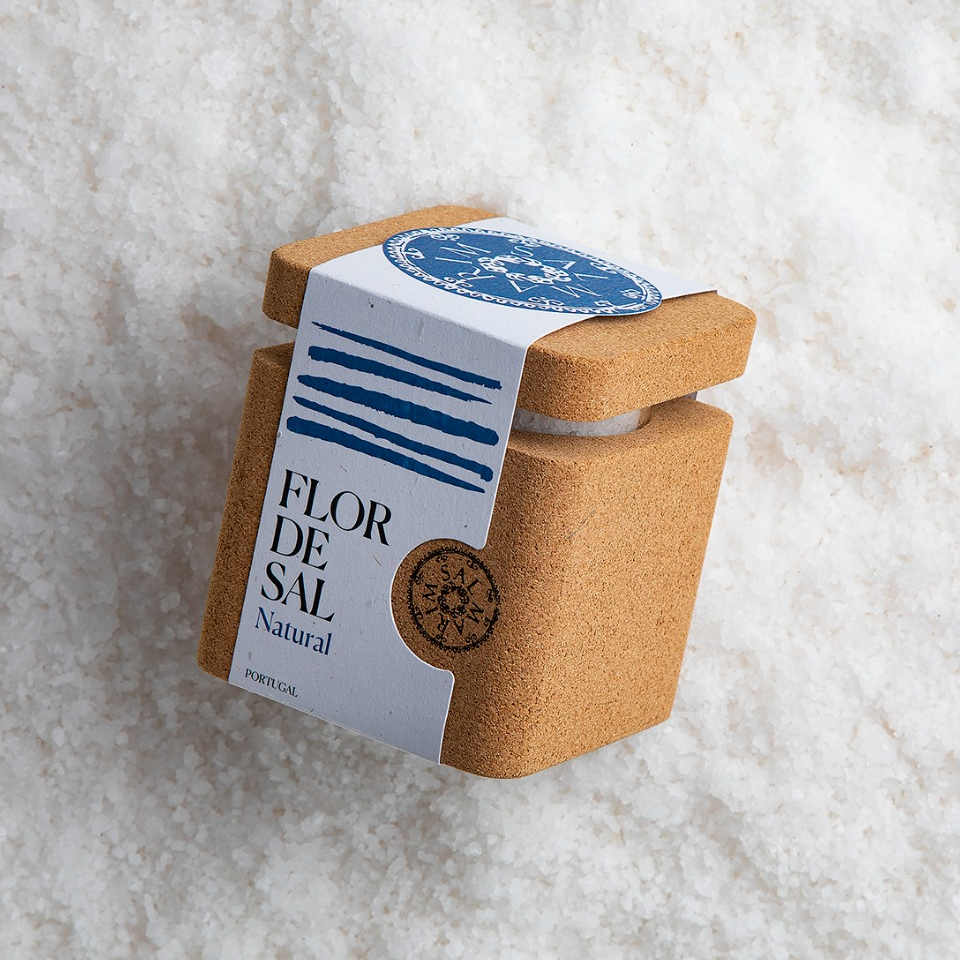
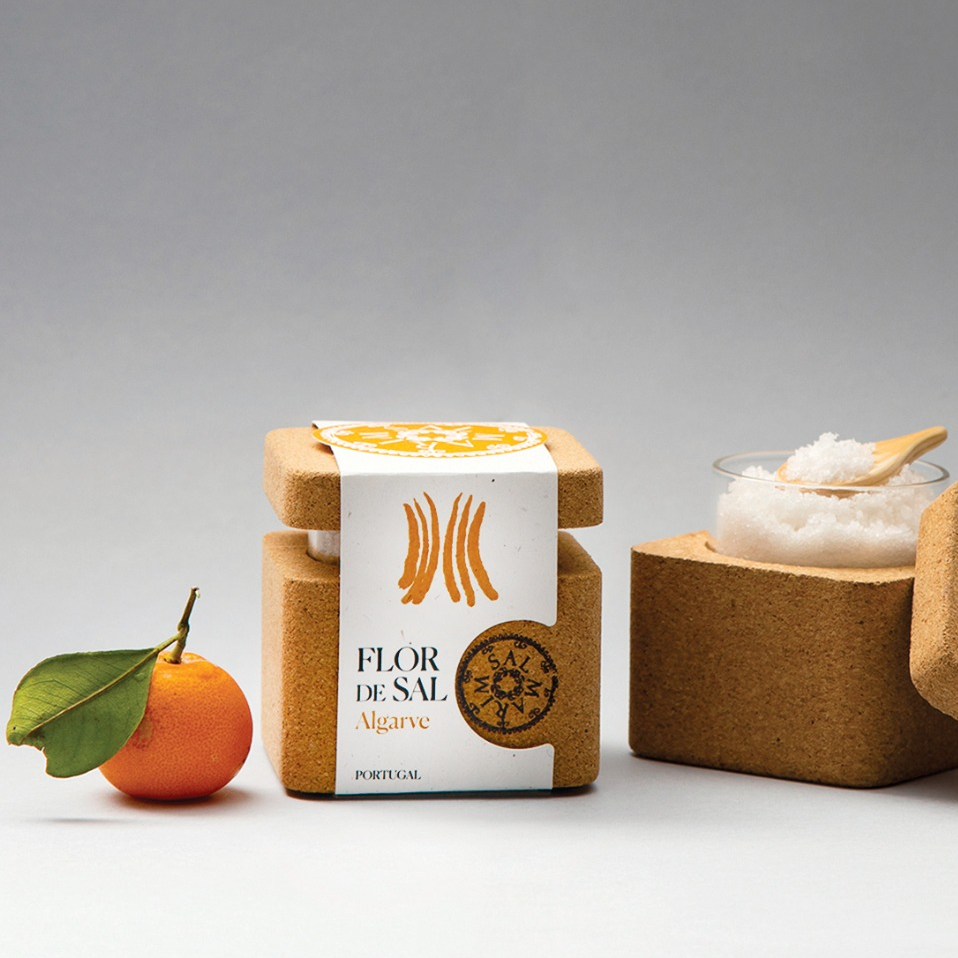
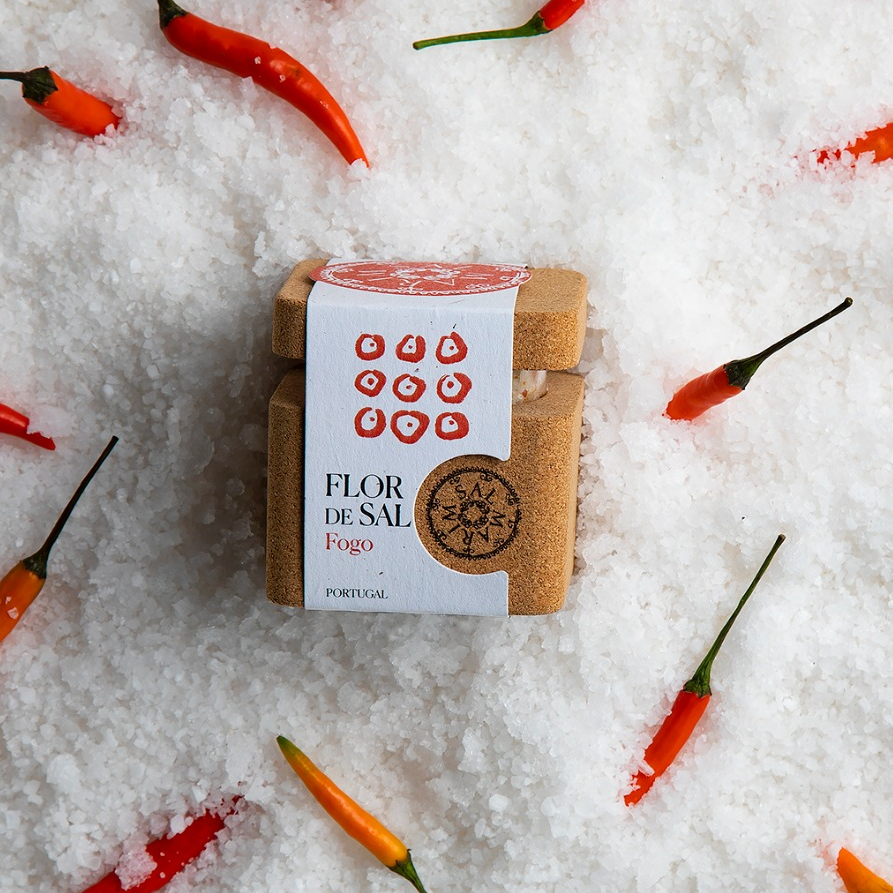
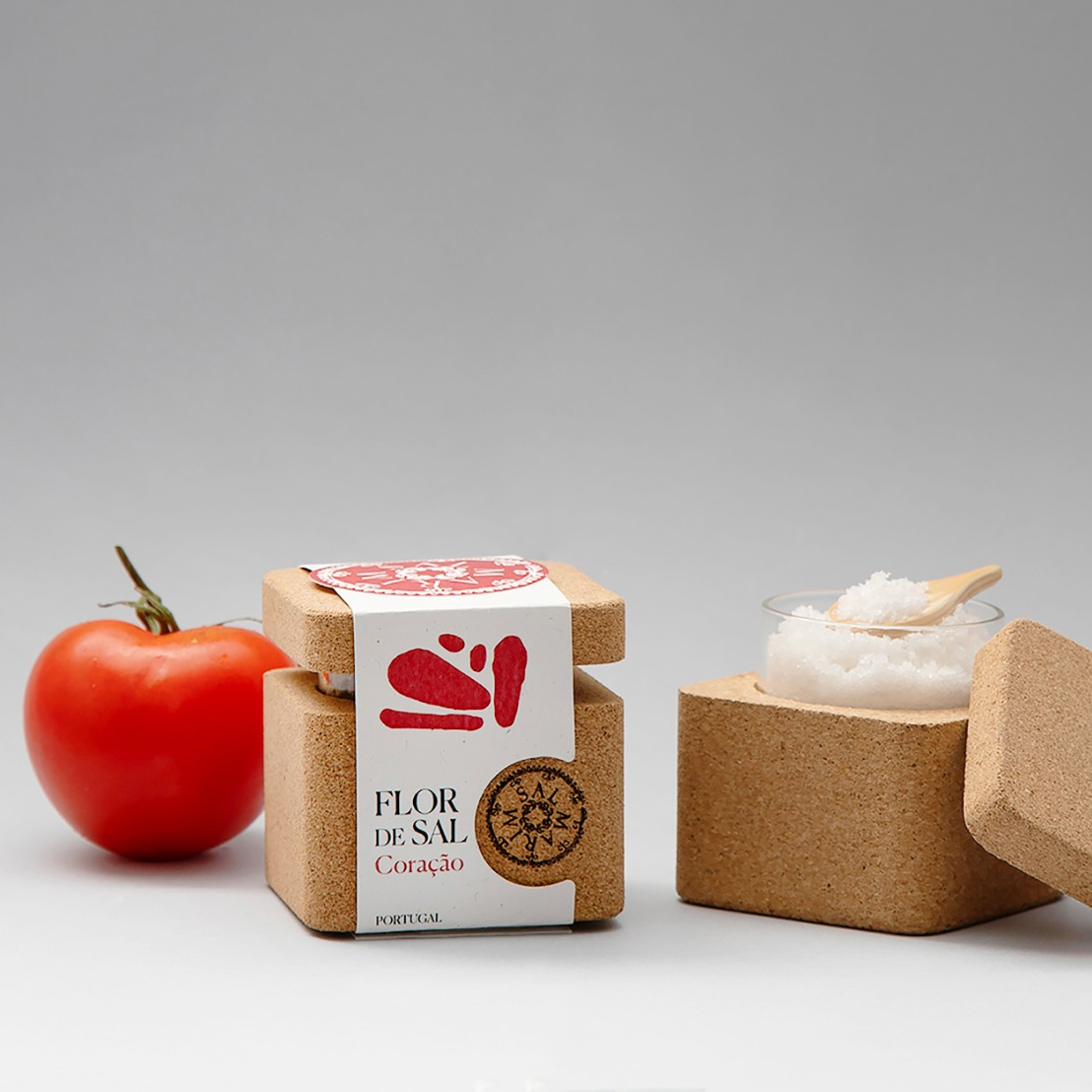
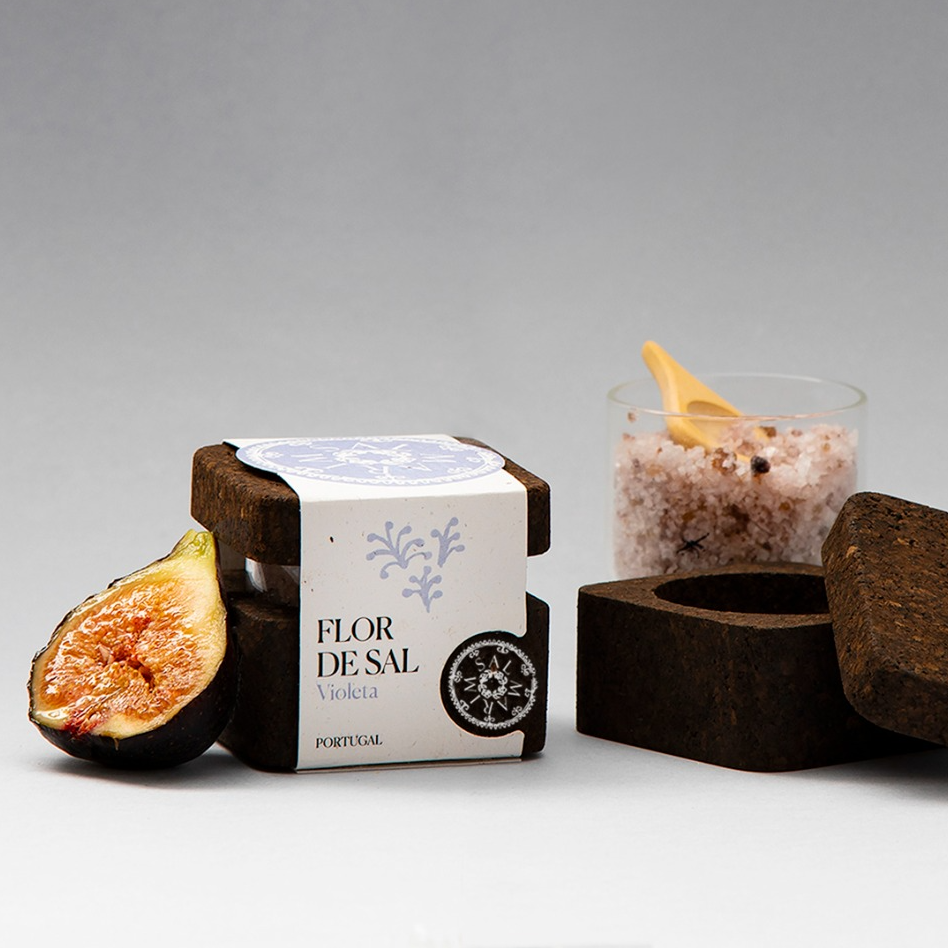
The Elements products shown here continue that attention to presentation: cork surrounds glass, while coloured bands and ingredient photographs distinguish the salts. The packaging gives readers another way into the business, but the pans and the harvest remain the starting point.
The Elements packaging was developed by Nutsbranding. Salmarim records its 2023 Red Dot: Best of the Best award for the collection’s design.
THE METHOD
How the salt is made.
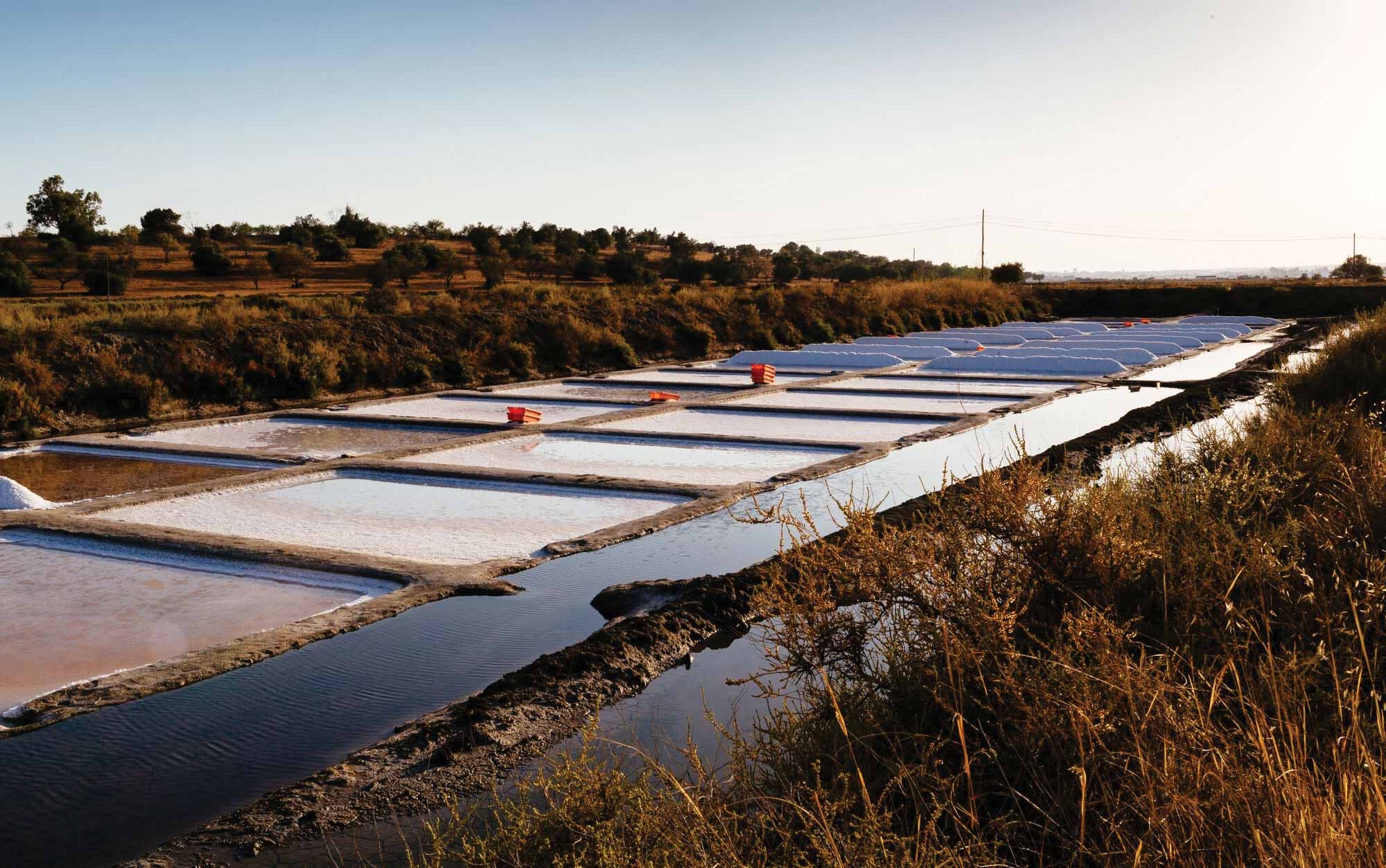
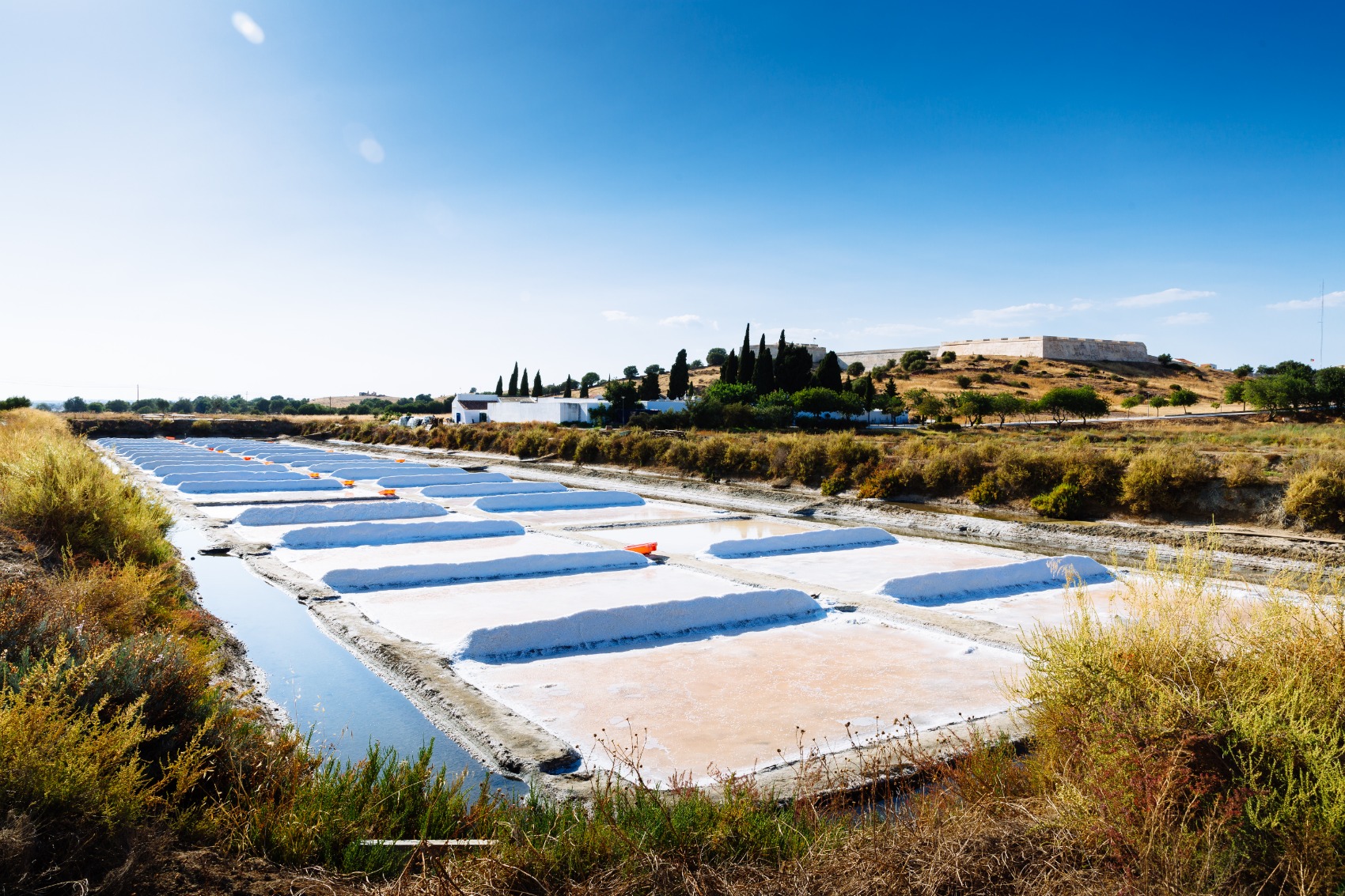
According to Salmarim, seawater enters through channels and sluices and is held in storage ponds, where evaporation begins and suspended material settles. The brine then moves by gravity into crystallisers. Sun and wind concentrate it further. Flor de sal forms at the surface and is harvested by hand; the producer also gathers sea salt, dries it in the sun and packs it. [1] [7]
Process described by the cited sources; method categories are editorial groupings. Not independently inspected.
THE HARVEST
What is made here.
[1] [2]PLAN A VISIT
Access unconfirmed
Public access has not been established from the reviewed sources. Contact the producer before planning a visit.
Reviewed 2026-10-29. Confirm current access directly before travelling.
What still needs checking
- This profile covers the named saltworks and adjoining pans; exact plot boundaries are not mapped.