 saltworks
A GUIDE TO TEXTURE
Salt grain sizes & shapes.
Fine for mixing. Coarse for texture. Flakes for the final touch. Get to know the crystals in your kitchen.
Source tells you where. Grain tells you how it feels.
Sea salt, for example, can come as fine grains, coarse crystals or flakes. [1] [2]
See the difference.
Real salt, photographed up close. Open a photograph for a closer look.
Fine sea salt
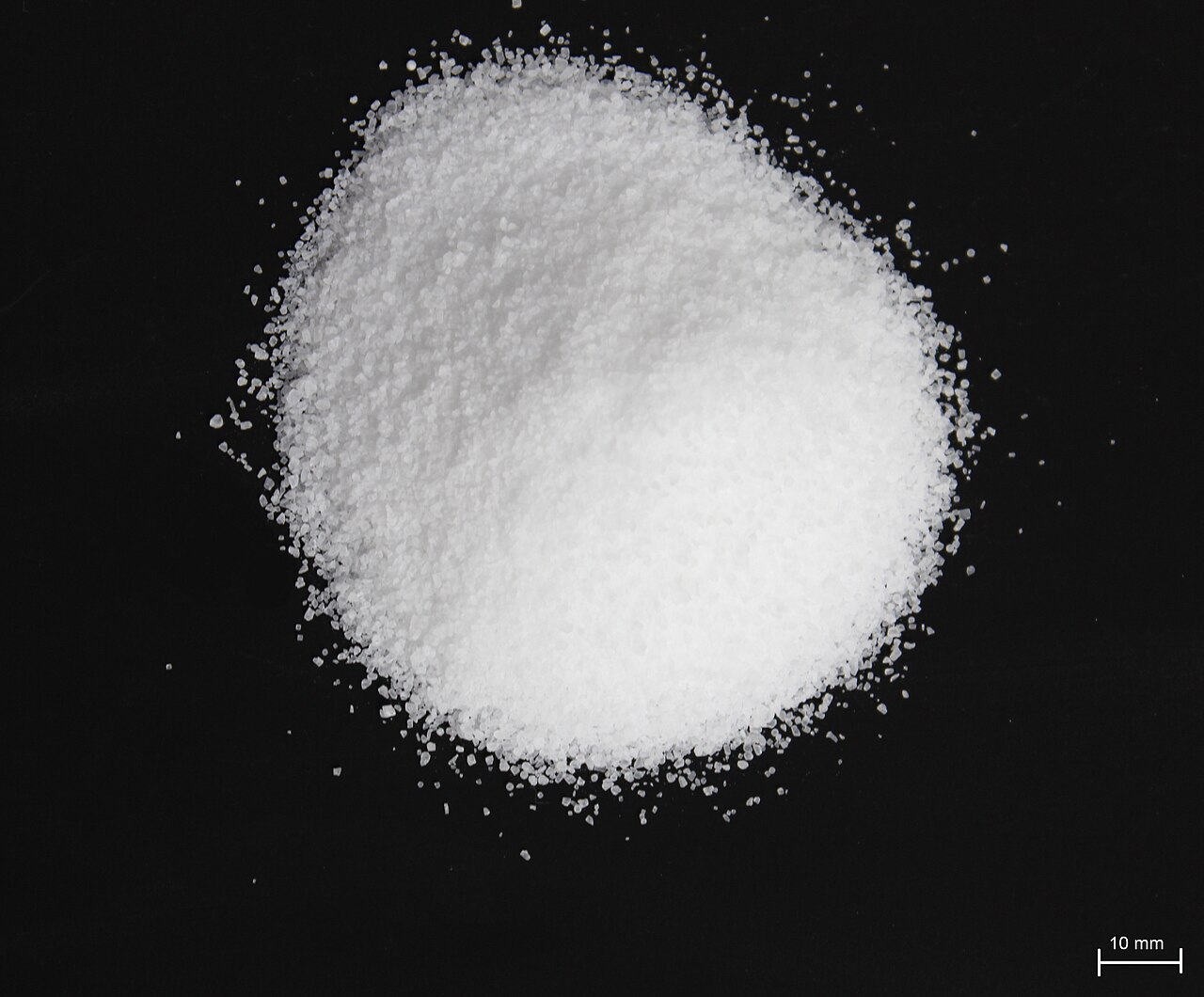
Small grains, with a 10 mm scale bar.
Photo: Poyraz 72 · CC BY-SA 4.0
Coarse sea salt
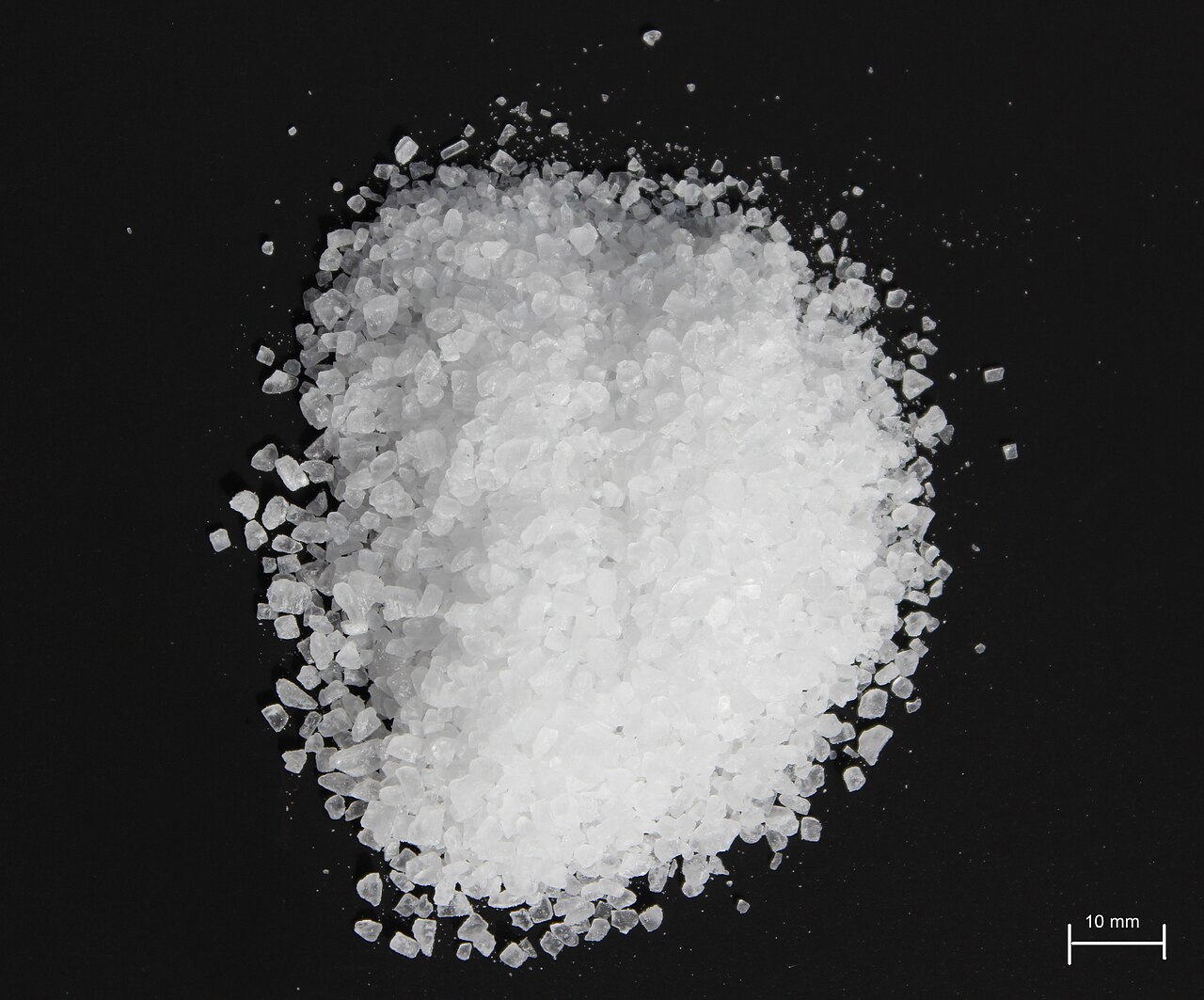
Larger crystals, with a 10 mm scale bar.
Photo: Poyraz 72 · CC BY-SA 4.0
Sea salt flakes
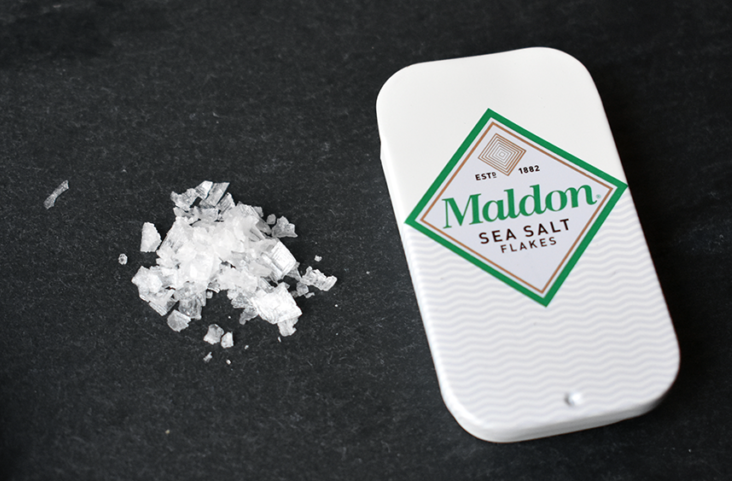
Maldon flakes beside their tin. No scale bar.
Photo: sousvideguy · CC BY 2.0
Use the 10 mm bars to judge fine and coarse grains. These photographs are not shown at identical magnification; the flakes image illustrates shape.
Six names to know.
Grain names and size ranges vary by producer.
Where does kosher salt fit?
Kosher salt is a style, not a source category or a single grain size. Brands differ in crystal shape and density, so check the brand when following a recipe. [3]
Meet Diamond Crystal kosher flakes →Choose by the job.
Mixing into a dish? Start with fine grains. Want a finishing crunch? Try flakes. Filling a mill? Use a compatible salt and check whether the mill accepts damp crystals. [1] [2] [4]
Explore salts on our shelf →Sources & further reading
Checked 9 November 2026. Product descriptions come from the named businesses. Photographs are credited beside each image. Fine and coarse: Wikimedia thumbnails, shown in full. Flakes: Commons crop by Belbury, shown without further edits. Photo dates: 2015 (fine/coarse), 2018 (flakes).