saltworks
THE PLACE
The people behind the salt.
Before Ciechocinek became a spa town, its brine was the foundation of a saltmaking project. Today the route still leads from graduation towers to the open pans of the saltworks. The work is tangible: workers gather crystals, drain the salt on wooden structures and move it into storage. [1] [3]
Salt first, then a spa town
The operator’s history traces the project to Konstanty Leon Wolicki, who acquired land with brine springs in 1823 and transferred it to the state the following year. Construction of the first two graduation towers took place in 1824–28, with Jan Jakub Graff responsible for their design.
The salt factory began production in 1832. The same history dates the conventional beginning of the spa to 1836, when brine baths became regularly available. A third graduation tower followed in 1859. These dates tell a story of a place built around brine, with saltmaking preceding the resort.
The people at the pans
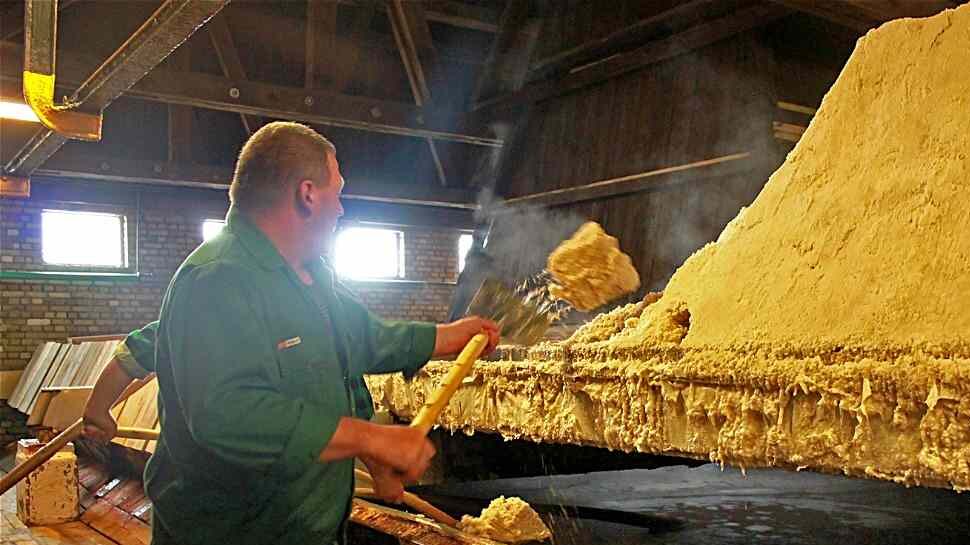
The museum’s account describes saltmakers, known as warzelnicy, working with simple tools. Concentrated brine is heated in shallow open pans; the crystals are gathered onto wooden draining structures before the salt is taken to storage.
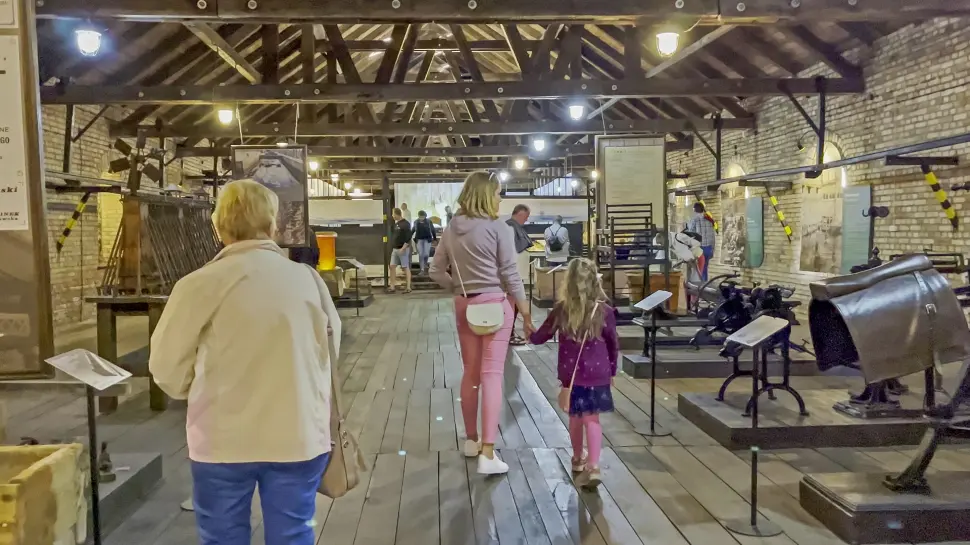
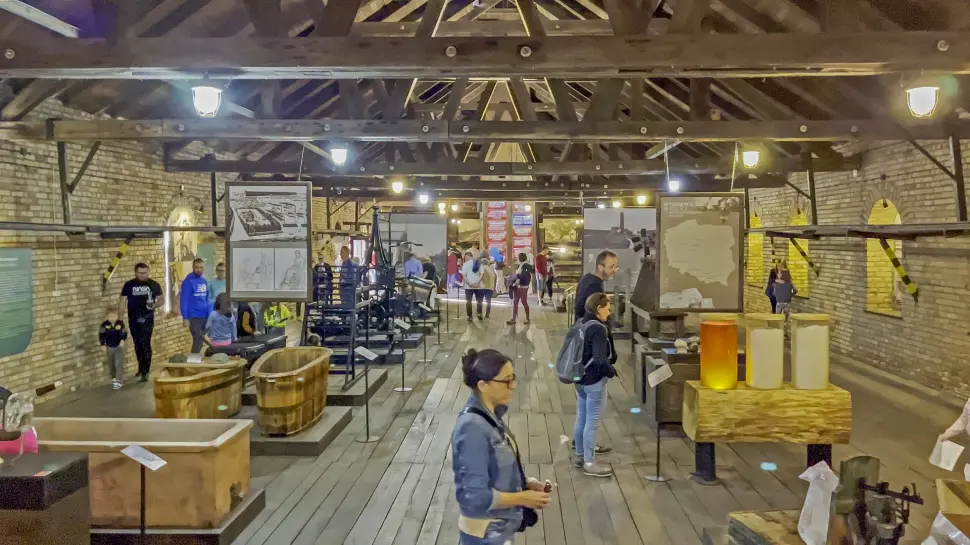
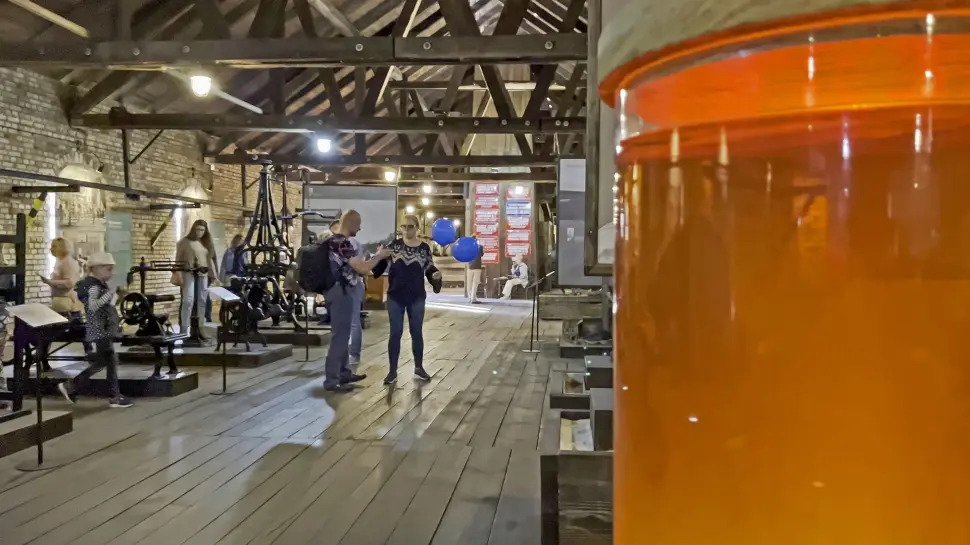
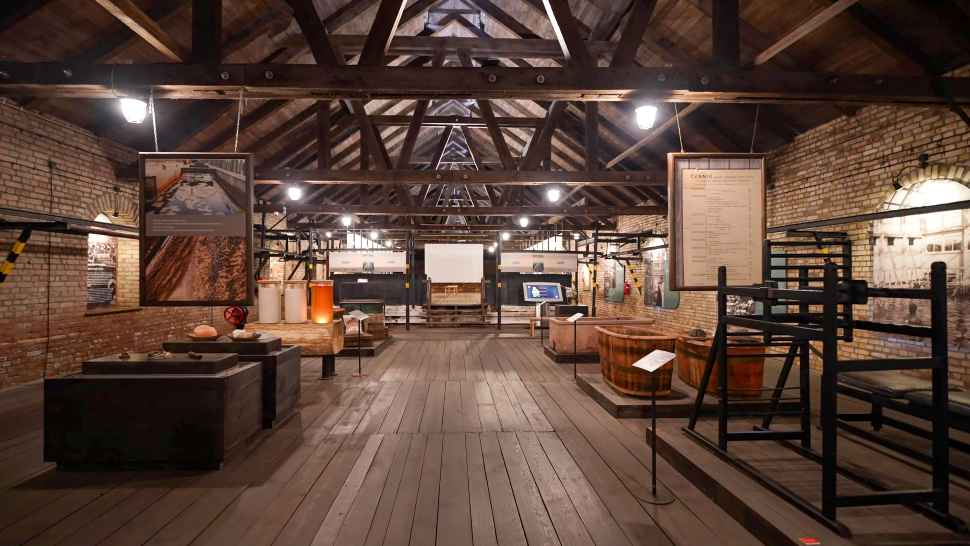
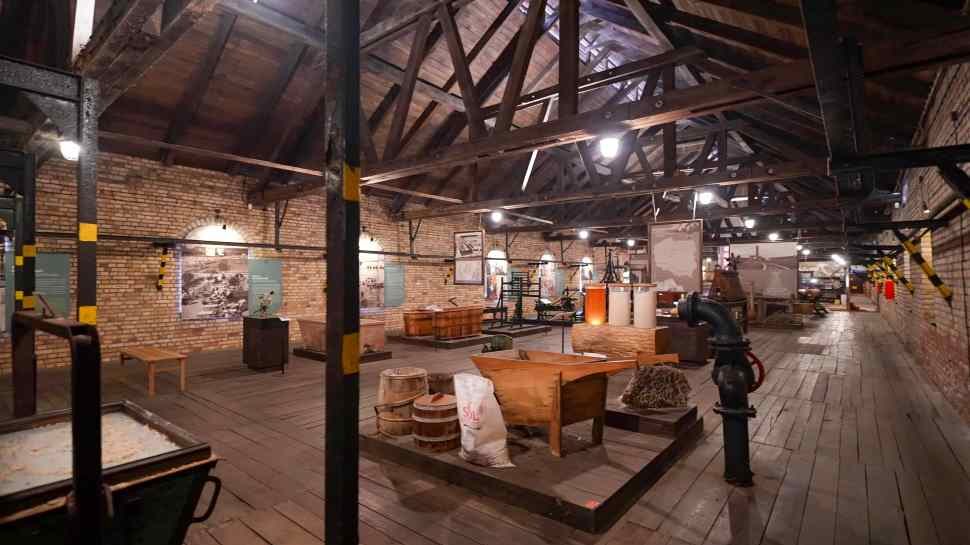
The photographs show both the working process and the rooms used for interpretation. They are different parts of the same story: present-day work alongside the equipment and spaces that help visitors understand it.
A working site with a museum inside
The museum occupies a section no longer used for production. Its displays connect saltmaking equipment with the history of Ciechocinek’s spa. A museum visit should not be read as unrestricted access to active production areas.
Uzdrowisko Ciechocinek S.A. operates a wider spa business, with accommodation and other products as well as the saltworks. This profile focuses on edible salt and the place where it is made; it does not adopt therapeutic claims or describe the whole company’s catalogue as food salt.
THE METHOD
How the salt is made.
According to the operator, brine concentrated in graduation towers is heated in shallow open pans. Workers gather the crystals onto wooden draining structures before the salt is moved to storage. [1]
Process described by the cited sources; method categories are editorial groupings. Not independently inspected.
THE HARVEST
What is made here.
PLAN A VISIT
Saltmaking experiences
A museum occupies the non-production part of the saltworks. Check current admission arrangements; a visit does not guarantee access to active production. [1]
Reviewed 2026-11-09. Confirm current access directly before travelling.
What still needs checking
- Desk research from attributed operator sources; no independent site inspection.
- Current production quantities and a complete site-specific product range remain unconfirmed.
- Photographs are sourced from the operator’s website; producer confirmation and photographer credits are pending.